Jewish Heritage Month is an opportunity to celebrate the rich history, culture and contributions of Jewish communities across Britain. In this guest blog, Lucy Erber uncovers the lives of the Georgian Jewish families who made Twickenham their home. If you’d like to discover more about Strawberry Hill House’s Jewish heritage, explore our online exhibition, The Unexpected Jewish Past of Strawberry Hill House, created in collaboration with the Jewish Country Houses Project.
By Lucy Erber
In the eighteenth century Richmond and Twickenham became areas that the London elite both purchased land to build houses on or bought already existing houses. Most lived and worked in London during the week and spent weekends and the summer months in their riverside homes. Influential individuals such as Horace Walpole, Alexander Pope, Henrietta Howard had homes in Twickenham. Jonathan Swift and John Gay were regular visitors to the area.
By the middle of the eighteenth century a small but distinct Jewish community began to establish itself in Twickenham. There was a level of inter marriage within the families who settled there, and they likely all knew each other.
Jews had been expelled from England in 1290 by Edward 1, following a considerable period of violence and discrimination perpetrated against them. They were not readmitted until 1656, when Oliver Cromwell allowed them to return but only once they had been granted a licence to live here. Jews could not settle in England again without restrictions until 1672, when Charles II allowed Solomon de Medina to settle freely in England (and in 1697 Medina was to live just up the river in Richmond). Jews could not be English citizens until 1753.
Despite being readmitted to live in this country, Jews continued to be the subject of significant discrimination. They could not join Guilds (the bodies that trained apprentices and regulated the practice of its trade) until 1830. They could not hold most public offices until well into the nineteenth century.
Abraham Prado (died 1782) was a horticulturist who imported grapevines who came to live in West Twickenham, in 1762, in a property now demolished. He married Esther Salvador in 1751. Esther was the mother of Francis Daniel Salvador (1746-1776), who later lived at what was known as The Lodge, sometimes, Twickenham Lodge. The house was situated on a large piece of land adjoining the Hampton Road, to the north of Wellesley Road in Twickenham.
Salvador’s family lost most of their money due to the Lisbon earthquake (1755) and the failure of the Dutch East India Company. The family owned a 7,000-acre tract of land in Carolina (America), and in 1773 Francis crossed the Atlantic, leaving his family behind, and set about developing this area. He got somewhat sidetracked as he joined the American cause for Independence. In 1776 he was killed in battle.
Ephraim Lopes Pereira d’Aguilar (1739-1802), came to Twickenham in 1772, leasing Gifford Lodge, next door to Abraham Prado, In 1780 he took a lease on Highshot House in Crown Road, Twickenham, remaining there until 1789. He was a merchant by profession but also had an inherited fortune. On losing much of this d’Aguiler moved to Islington, where he kept cattle, under somewhat dubious conditions. He was viewed as being miserable, reclusive and an eccentric.
D’Auguilar’s sister, Leah was married to Raphael Franco (1746-1781). He leased Little Marble Hill for him and his family (then known as Marble Hill Cottage, located in the Southeastern corner of the Marble Hill Estate) from 1778 until his death three years later.
Raphael’s brother Moses was to marry one of the daughters of Francis Daniel Salvador.
Horace Walpole, the creator and owner of Strawberry Hill House, wrote in his letters about the links that he had to some of these people from the Jewish community of Twickenham.
The Prados are often mentioned in his correspondence. Walpole makes mention of being gifted some of the large bunches of grapes by Abraham in one of his letters. In this same letter he refers to Abraham as being ‘of the tribe of Issachar’. The Tribe of Issachar is one of the twelve tribes of Israel, which is known for its agricultural heritage, wisdom, and significant role in biblical history.
Walpole also mentions Raphael Franco in his letters, following a firework display organised by him in honour of the King’s birthday in June 1780. Fireworks were very expensive at this time, suggesting that Raphael was an affluent man.
My book The Jews of Twickenham will be published later this year by People & Places. It will contain a Chapter on the Jews of the Georgian period. Whilst there has never been a sizeable Jewish community in Twickenham my book will cover several of those who have made their home in the area.
Just some examples are Lady Frances Waldegrave, who further developed Strawberry Hill House in the mid-19th century and Nellie Ionides, who saved the Octogen room at Orleans House leaving it to the residents of the Borough on her death and funded a local Kinder Hostel for Jewish refugee boys from Austria and Germany during World War 2. This is alongside a selection of ordinary people known to few who made significant contributions to the local community and beyond.
SOURCES
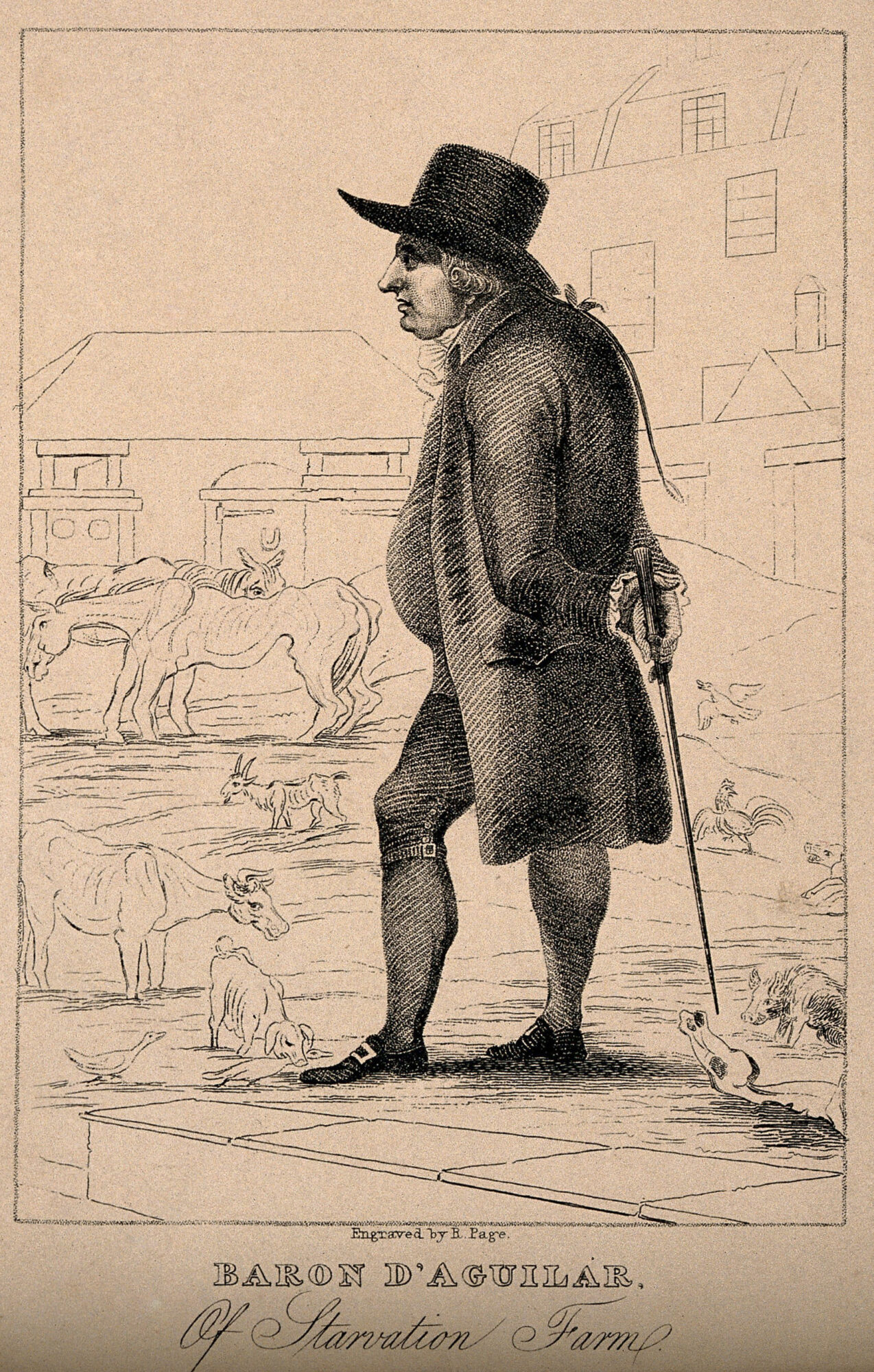
Baron D’Aguilar, an eccentric merchant farmer with animals and farm buildings in background. Stipple engraving by R. Page. Wellcome Collection
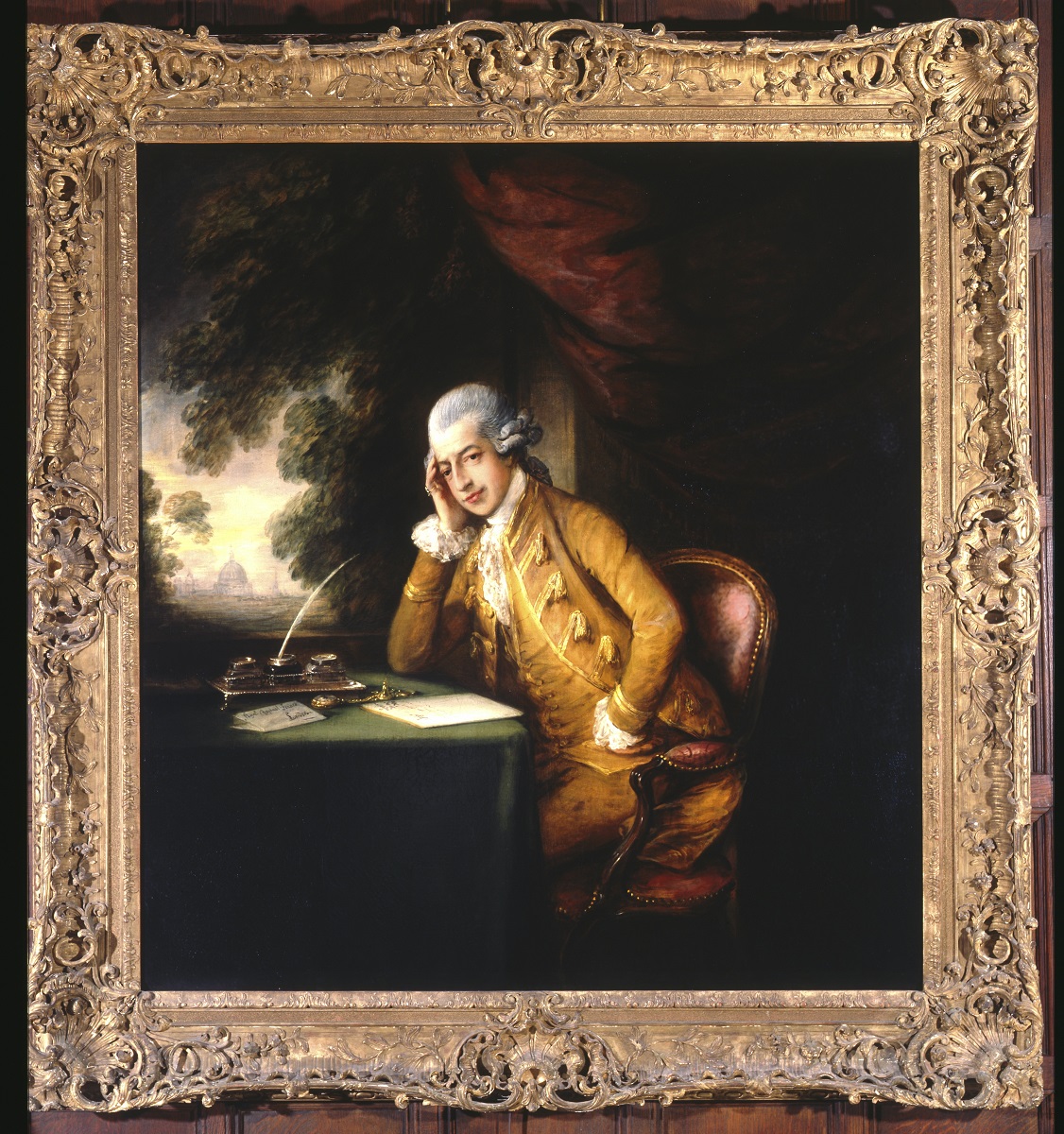
Thomas Gainsborough portrait of Raphael Franco-1780 (published with permission of Newport Restoration Foundation, Newport, Rhode Island USA)
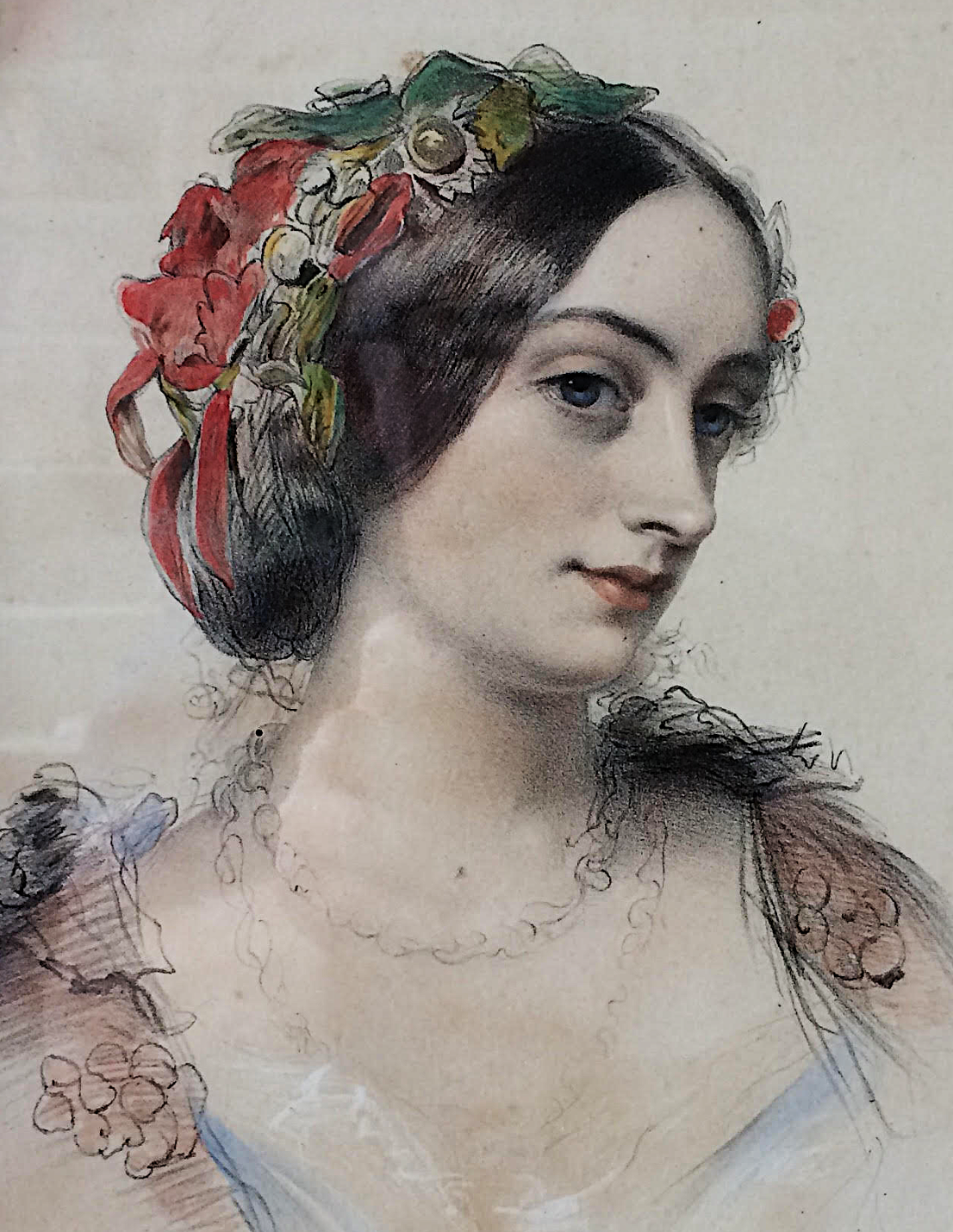
James Rannie Swinton, Portrait of Lady Frances Waldegrave, 1850, watercolour, private collection.