Thanks to the generosity of our supporters, we have reached our £85,000 fundraising target and secured Johann Heinrich Müntz’s South East View of Strawberry Hill House for the permanent collection.
Painted between 1755 and 1758 and commissioned by Horace Walpole himself, this extraordinary view captures his Gothic villa before the addition of the main Cloister, Long Gallery and Round Tower, offering a rare glimpse of Strawberry Hill at the very beginnings of the Gothic Revival.
Although painted for Walpole, it was kept at his London home and had never hung in the house it depicts before arriving on loan earlier this year. Now, it has a permanent home in the place that inspired it.
We are deeply grateful to everyone who donated, to the two generous supporters who matched gifts to the appeal, and to all those who helped make this acquisition possible.
The painting is currently on display in the Red Bedchamber and can be viewed as part of general admission.
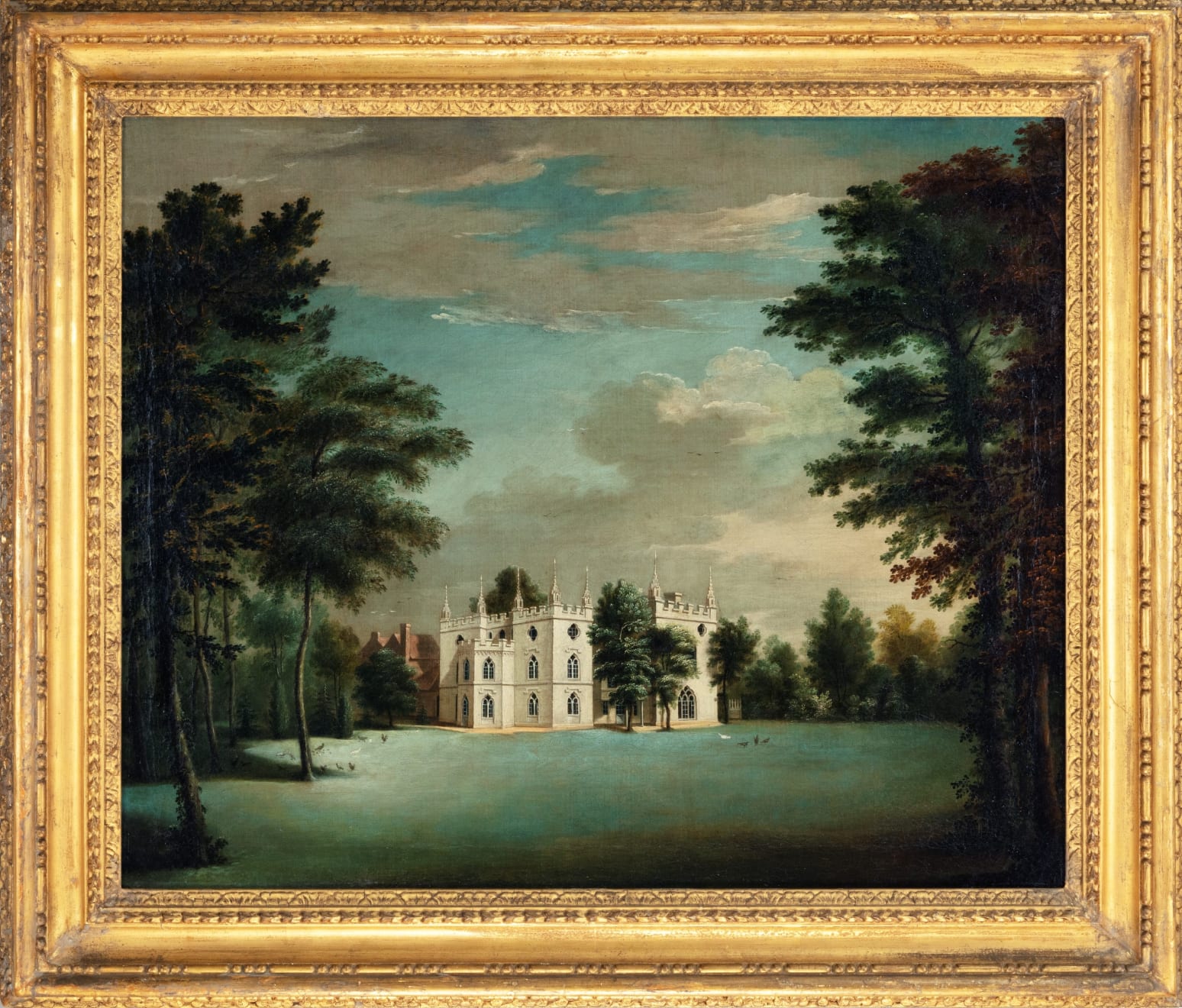
Johann Heinrich Müntz, South East View of Strawberry Hill House, c.1755–58. Oil on canvas.
This painting is one of only two known oil paintings of Strawberry Hill by Müntz. Its companion picture is held at the Lewis Walpole Library at Yale University. Together, these paintings constitute the earliest detailed visual records of Horace Walpole’s revolutionary architectural vision.
The canvas captures the house in its earliest Gothic form, when the building was more symmetrical, with a low service wing incorporating earlier fabric. In 1759, Walpole demolished this wing and built the Gallery and Round Tower, creating the dramatic silhouette we know today.
The Swiss artist Johann Heinrich Müntz was more than Walpole’s painter. From 1755 to 1759 he lived and worked at Strawberry Hill as Walpole’s in-house artist and designer, contributing directly to the invention of Gothic at the house.
During these formative years, Müntz produced paintings, drawings and decorative designs while working closely with Walpole on architectural ideas and technical experiments. He was not simply recording Strawberry Hill — he was helping to shape it. The house he painted was still evolving, and he was part of that evolution.
The painting is also the earliest visual record of the garden, made around ten years after Walpole began his ambitious programme of tree-planting. It includes the celebrated “theatrical shrubbery” border, an important feature of Walpole’s landscape design that has since been carefully recreated at Strawberry Hill.
What we see here is not a finished monument, but a creative work in progress — house and garden emerging together.
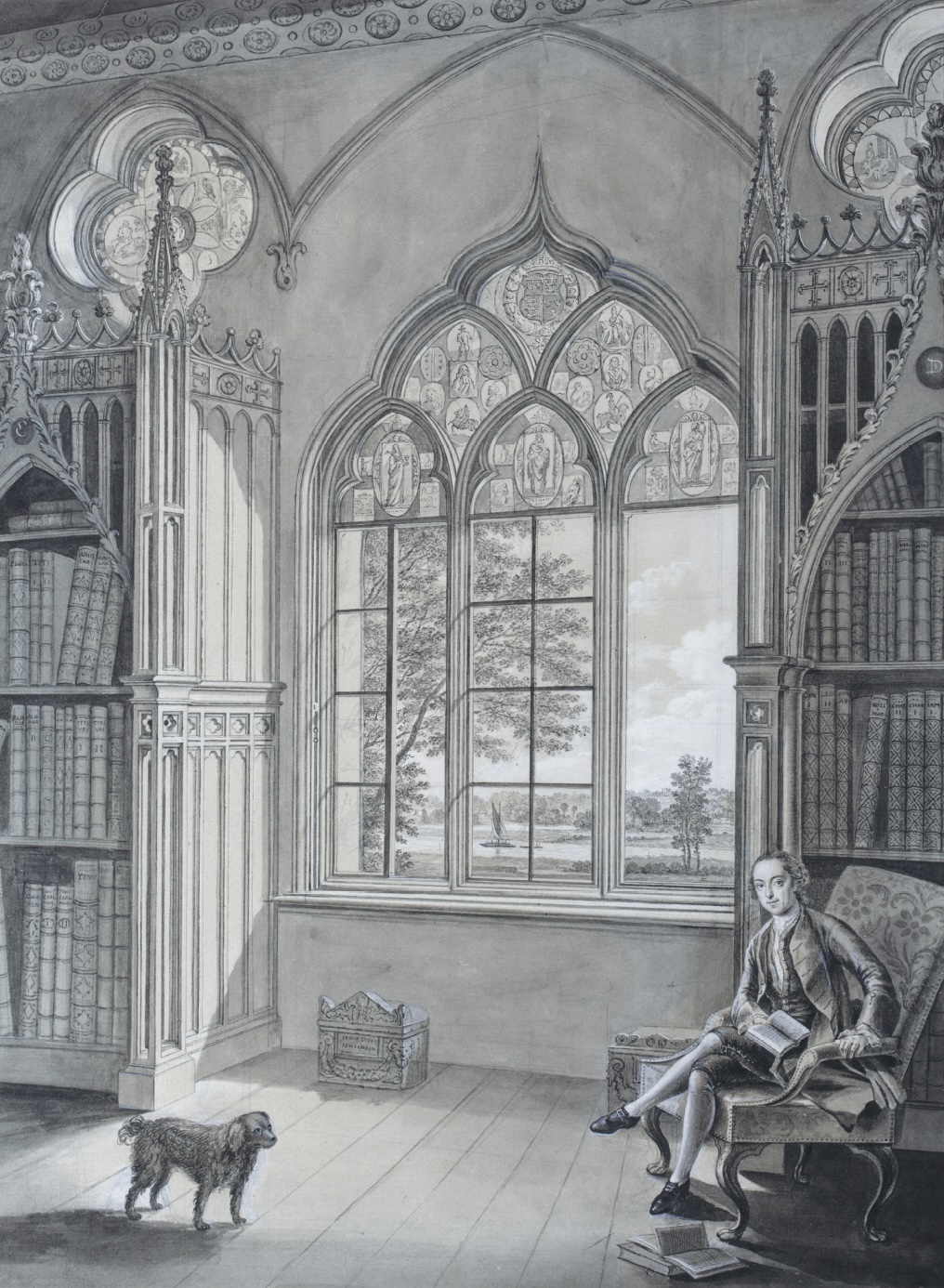
Johann Heinrich Müntz, A drawing of Horace Walpole, in his Library, Private Collection.
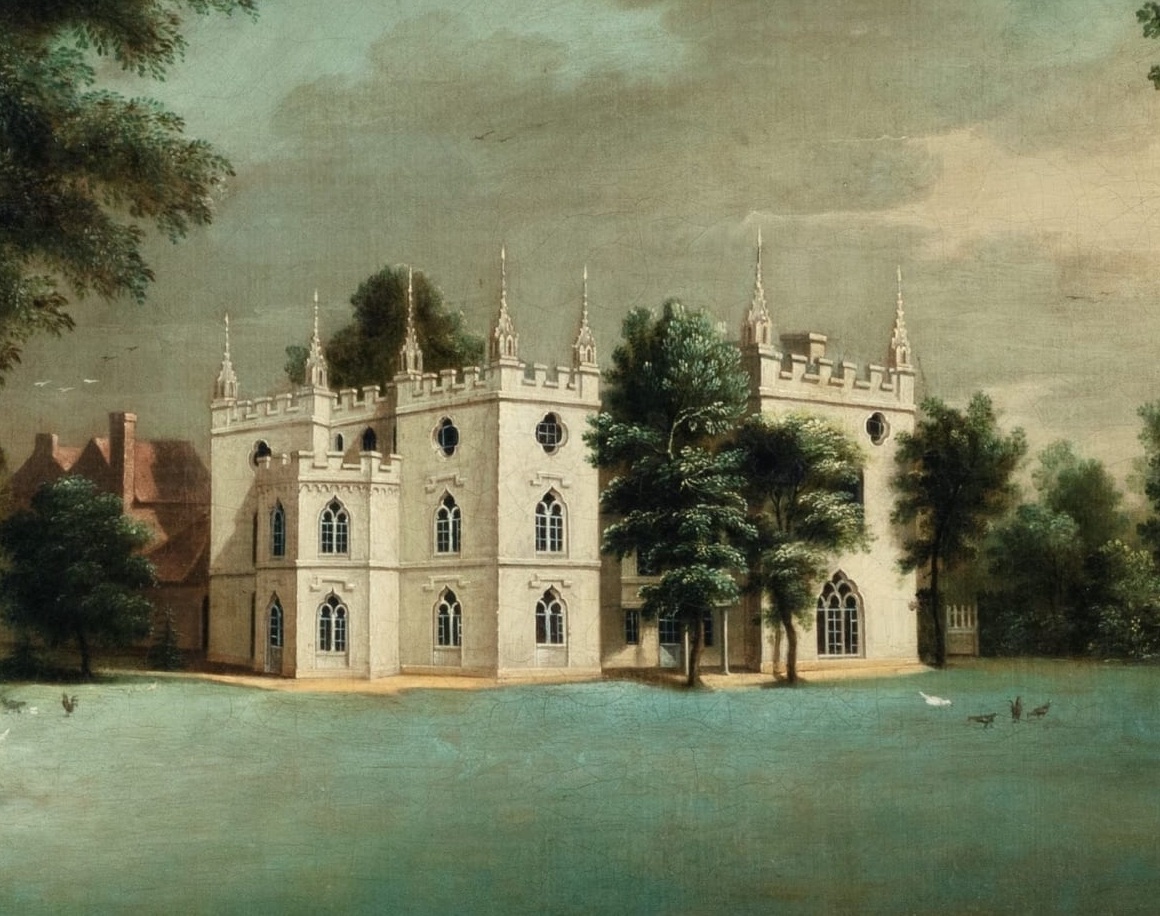
Strawberry Hill was conceived as a total work of art: architecture, interiors, landscape and collections designed to operate together as a single imaginative statement.
This painting is a cornerstone of that vision. It allows visitors to understand how Strawberry Hill evolved from Walpole’s first Gothic experiment into one of the most influential buildings of the eighteenth century, and how the Gothic Revival emerged not fully formed, but through process, revision and bold creative risk.
Painted for Horace Walpole and long kept at his London residence on Berkeley Street, this view of Strawberry Hill has never hung in the house it was created to record.
Our special thanks go to Thomas Coulborn & Sons, Fine Art Dealers, whose support for this campaign reflects a shared commitment to ensuring works of this importance are kept in public hands.