With thanks to the Stanley Smith (UK) Horticultural Trust.
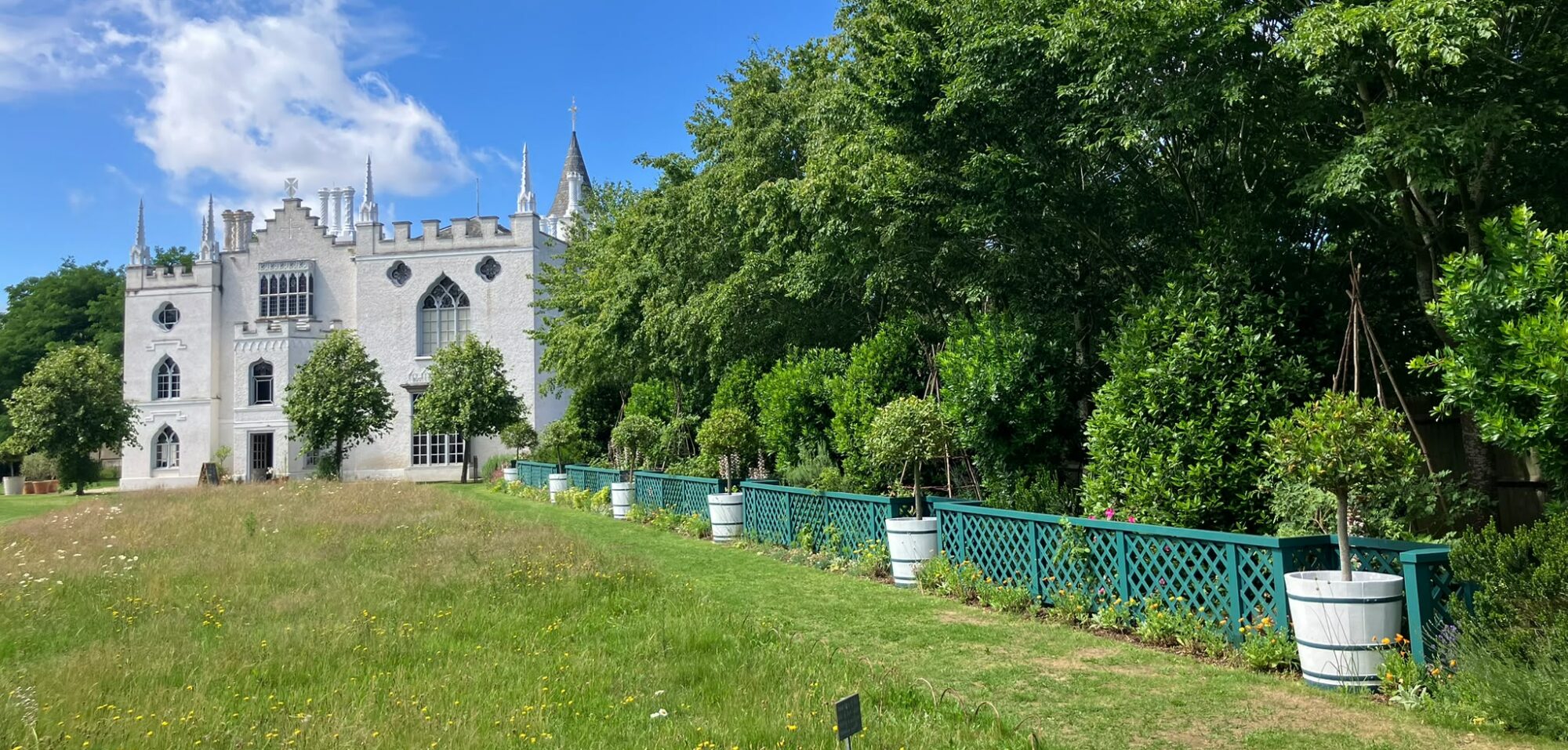
One of the most distinctive features of Horace Walpole’s garden has recently been brought back to life. Over the past few months, Strawberry Hill House’s historic Theatrical Border has undergone a programme of restoration, renewing a rare survivor of eighteenth-century garden design.
Designed in the eighteenth century, the Theatrical Border is a rare surviving example of a theatrical shrubbery — a style of planting that arranged trees, shrubs and flowers almost like scenery on a stage. The effect was carefully orchestrated, creating depth, drama and surprise while reflecting the shift towards the more naturalistic garden designs that became fashionable during Walpole’s lifetime.
Today, restored examples of this type of border are exceptionally rare, making Strawberry Hill’s an important part of Britain’s garden heritage. Positioned at the entrance to the House, it forms many visitors’ first impression of Walpole’s “enchanted little landscape.”
Fifteen years after its original restoration, the border had begun to show its age. Some plants had failed, the distinctive timber trellis had weathered significantly, and areas of the planting had become sparse. The project aimed not only to restore the border’s appearance but also to ensure it remains resilient and sustainable for years to come.
Throughout the winter, our dedicated team of volunteers repaired, sanded and repainted the full length of the timber trellis, restoring one of the defining features of the border. Its fresh colour once again provides a striking backdrop to the planting and helps recapture the theatrical effect Walpole intended.
The planting itself has also been carefully renewed. Beds were improved with mulch to increase moisture retention and soil health before being planted with hundreds of spring-flowering bulbs chosen for their historical appropriateness. These have been joined by herbaceous perennials and evergreen planting to create a richer sense of abundance while ensuring seasonal interest throughout the year. Wherever possible, existing plants were divided and propagated on site, with many new plants grown from seed, reflecting a sustainable approach to the restoration.
Behind the trellis, new flowering shrubs have been introduced to complement the mature trees already in place, while handcrafted hazel obelisks provide height and structure for climbing plants that will continue to develop over the coming seasons. Many of these plants are still establishing themselves, meaning the border will become even more spectacular as it matures.
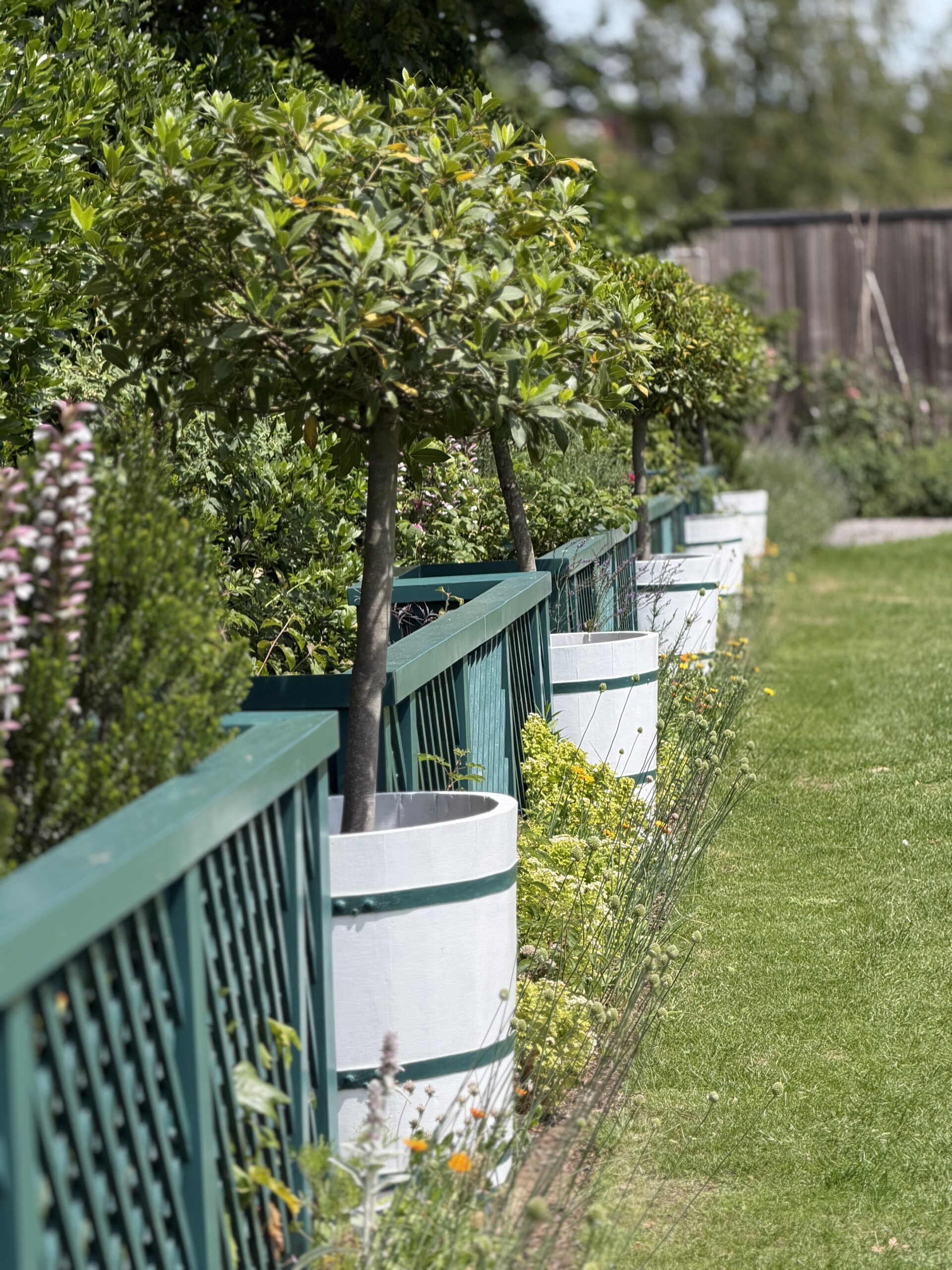
One particularly satisfying aspect of the project has been the reinstatement of the row of pots set within the trellis. In Walpole’s day these niches housed orange trees, which were moved indoors during the winter by his large gardening staff.
While maintaining orange trees is no longer practical, we have instead restored and repositioned elegant standard bay trees (Laurus nobilis) within the historic setting. With invaluable assistance from our neighbours at St Mary’s University, the heavy pots were carefully relocated before our volunteers repaired, repainted and refreshed them, creating a feature that reflects the spirit of the original design while being far better suited to the realities of modern garden management.
The transformation has already made a remarkable difference. The renewed border once again provides a welcoming approach to Strawberry Hill House and better reflects Horace Walpole’s vision of an ornamental landscape where architecture and planting work together to create beauty, atmosphere and delight. As the new planting continues to establish over the coming years, visitors can look forward to seeing the border grow ever richer with colour, texture and seasonal interest.
We are enormously grateful to the Stanley Smith (UK) Horticultural Trust for supporting this project, and to our incredible team of volunteers whose hard work, enthusiasm and dedication have made this restoration possible.
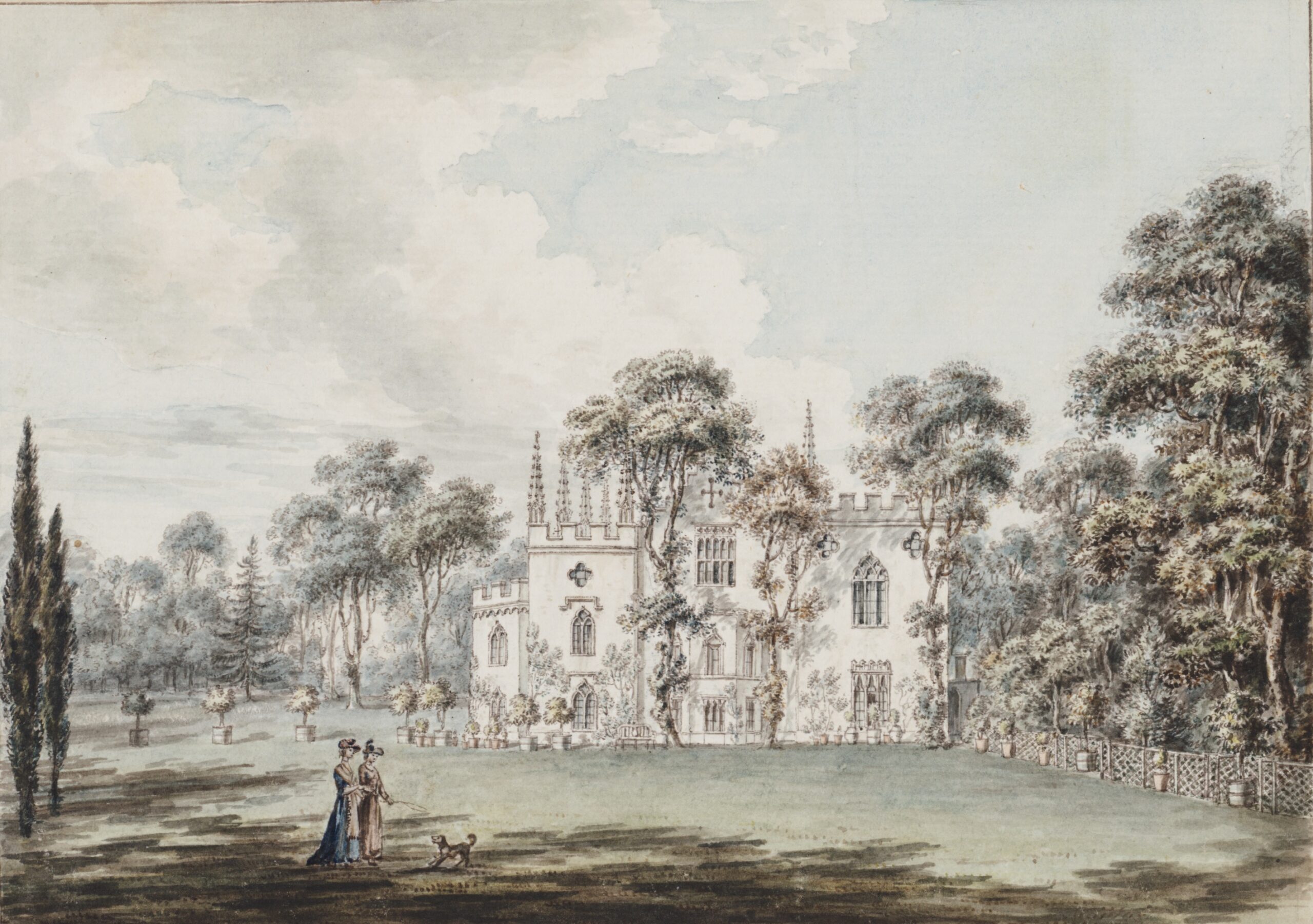
William Watts, View of Strawberry Hill (c.1779–1786). showing Horace Walpole’s Theatrical Border stretching alongside the lawn, Courtesy of the Lewis Walpole Library, Yale University.
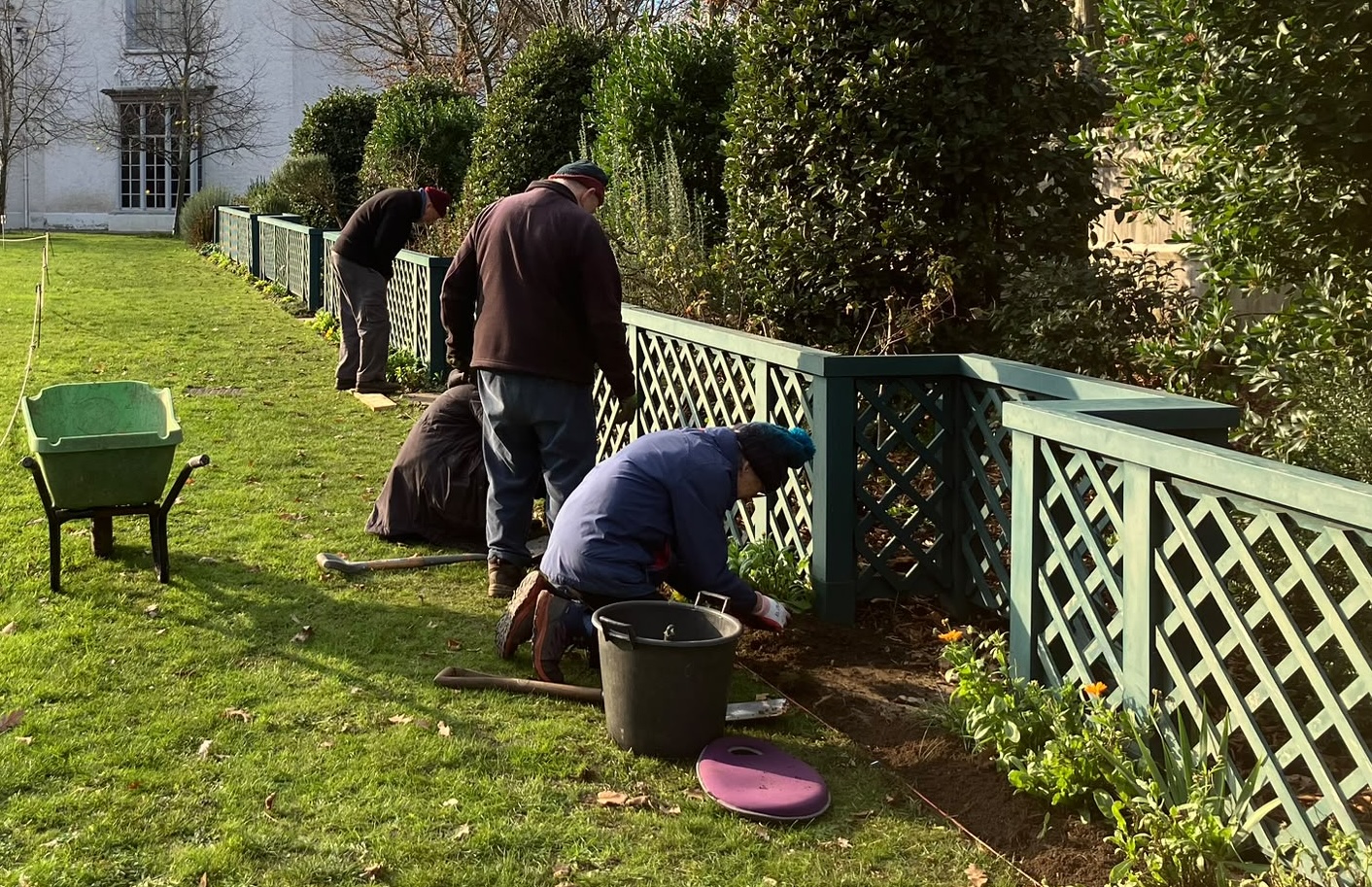
Our wonderful garden volunteers at work.